A Beginner’s Guide to Marine Electronics: Essential Boat Systems Explained
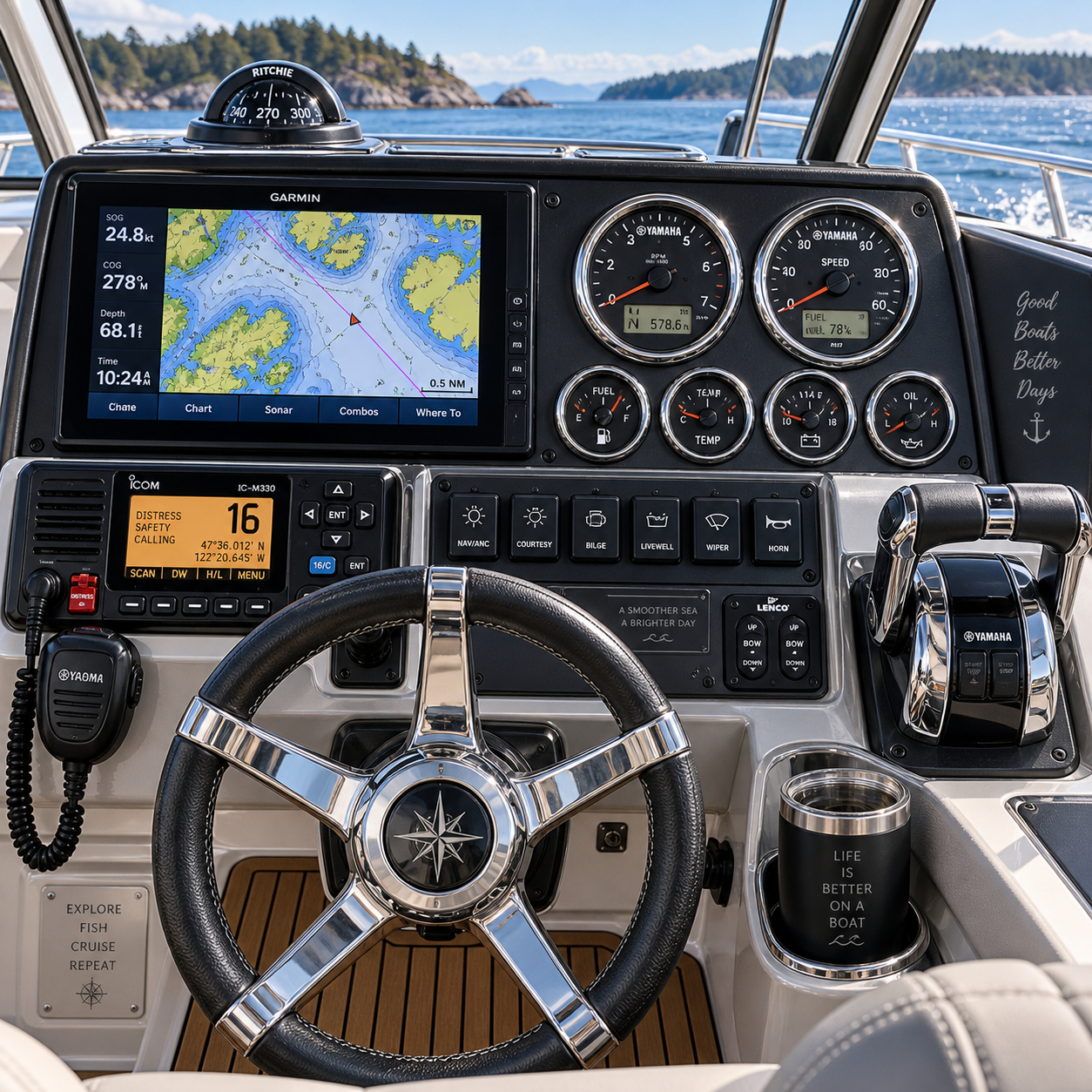
Marine electronics help boaters navigate, communicate, monitor depth, find fish, and understand what the engine and onboard systems are doing. The right setup does not need to be complicated. Beginners can build a reliable system by matching each device to the boat’s size, activities, power supply, and existing marine engine.
What Are Marine Electronics?
Marine electronics are electrical and digital systems designed to support boat navigation, communication, safety, and engine awareness. They collect information through antennas, sensors, and transducers, then display it in a form the operator can use.
A typical recreational boat may use a chartplotter for digital charts and GPS navigation, a marine VHF radio for communication, and a depth sounder to show water beneath the hull. Larger or faster boats may also benefit from radar, an autopilot, engine monitoring, and a network that allows compatible devices to share data.
These systems improve situational awareness, but they do not replace a proper lookout, paper or electronic charts, weather awareness, seamanship, or emergency procedures. Electronics can lose power, receive inaccurate data, or be affected by poor installation. Treat them as decision-support tools rather than automatic substitutes for good boating practice.
Essential Marine Electronics for Beginners
The essential marine electronics for a beginner are usually a chartplotter with GPS navigation, a marine VHF radio, and a dependable depth sounder. Add a fish finder, radar, or autopilot when your boating area, activities, and budget justify the extra complexity.
Chartplotter and GPS navigation
A chartplotter combines a screen, electronic charts, and GPS navigation to show the boat’s position, course, speed, waypoints, and routes. GPS provides the position data; the chartplotter presents that information alongside charted hazards, aids to navigation, shorelines, and depth information.
Choose a screen that remains readable in direct sunlight and can be operated while the boat is moving. A larger display improves visibility, but it also takes more helm space and may draw more power.
Marine VHF radio
A marine VHF radio provides short-range communication with other boats, marinas, rescue services, and marine authorities. It is a core safety device, especially when operating beyond easy shouting distance from shore.
Fixed-mount VHF radios generally offer more dependable range than handheld units when paired with a correctly installed antenna. Learn the local channel rules and emergency procedures before you need them.
Depth sounder and fish finder
A depth sounder measures the water below the boat, while a fish finder uses similar sonar principles to display bottom structure, vegetation, and possible fish targets. Many modern units combine both functions.
For a family boat, accurate depth and a shallow-water alarm may matter more than advanced fish-identification features. Anglers may value side-imaging, down-imaging, or higher-detail sonar, but those features can require a more carefully selected transducer.
Radar and autopilot
Radar detects objects and land using radio waves, making it valuable in darkness, rain, haze, or busy waterways. An autopilot steers a programmed heading or route, reducing workload on longer trips.
Radar and autopilot are useful upgrades, yet both require training and correct setup. Radar does not identify every hazard, and an autopilot does not watch for traffic. The operator must continue monitoring the water and the equipment.
How to Choose the Right Equipment for Your Boat
To choose marine electronics, start with the boat’s size, boating purpose, operating environment, available power, and existing equipment. Compatibility matters as much as screen size or feature count.
Use this simple decision sequence:
- Define the activity: cruising, fishing, watersports, coastal travel, or occasional lake use will lead to different priorities.
- Check the helm space: measure the available panel area and viewing angle before selecting a display.
- Review the power system: confirm whether the boat uses a 12-volt or 24-volt system and whether the marine batteries can support additional loads.
- Check compatibility: compare connectors, voltage requirements, network standards, chart formats, transducer support, and engine-data interfaces.
- Plan for the environment: choose equipment intended for marine use, with suitable water resistance, sunlight visibility, vibration tolerance, and corrosion protection.
A compact boat may need only a chartplotter, VHF radio, and depth sounder. A larger boat with twin marine engines may benefit from a multifunction display that shows fuel data, engine temperature, oil pressure, alarms, and trim information. These benefits depend on compatible engine interfaces and gateways, so never assume that any display will read data from any engine.
Buying the most advanced device first can create unnecessary cost and installation work. A simpler system with reliable power and clear controls is often safer than a feature-rich system that the operator has not learned to use.
Understanding Transducers, Sensors, and Displays
Transducers and sensors collect physical information, while displays convert that information into charts, numbers, graphics, and alarms. The transducer is therefore just as important as the fish finder or multifunction display connected to it.
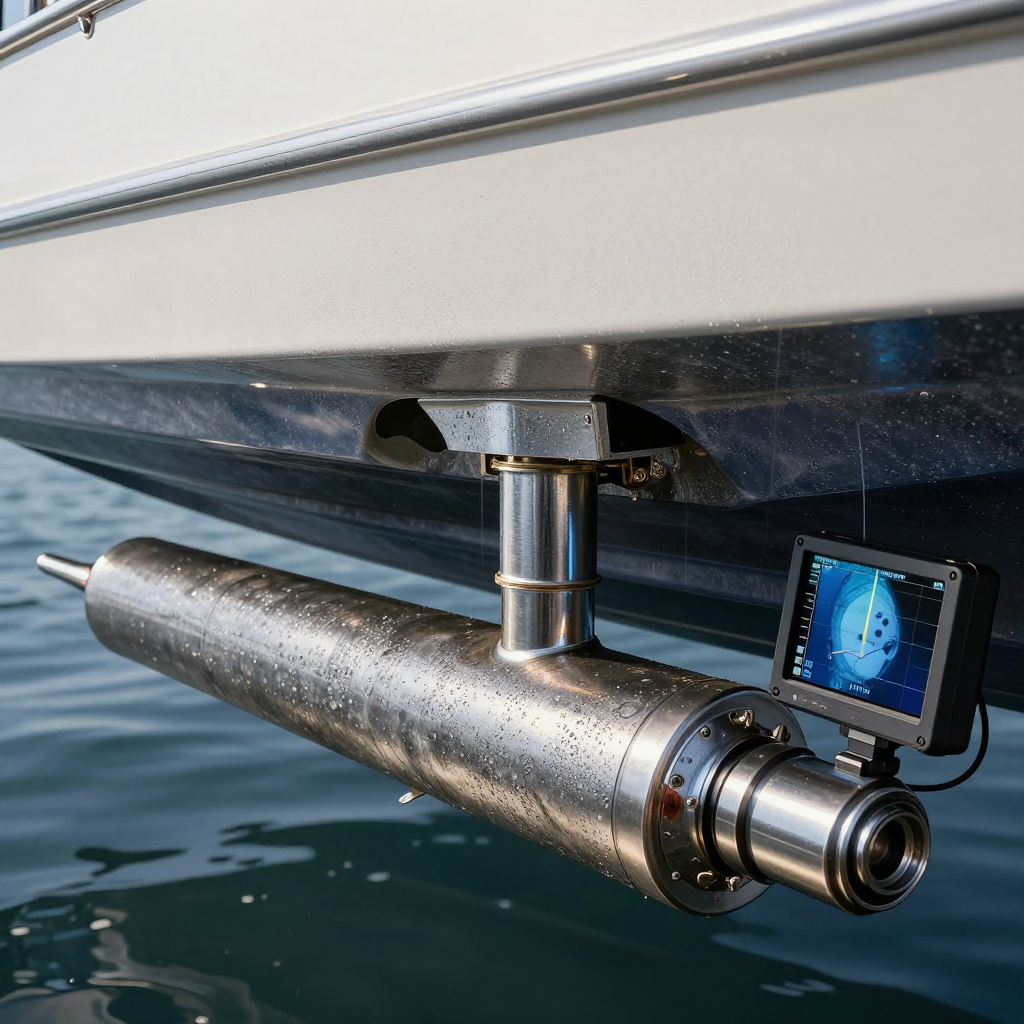
A sonar transducer sends sound pulses through the water and interprets returning echoes to estimate depth and show underwater structure. Other sensors can measure water temperature, speed, heading, wind, fuel level, engine temperature, or battery voltage.
Common transducer installation types include:
- Transom-mount: accessible and relatively simple for many smaller boats, but vulnerable to turbulence and impact.
- Through-hull: often provides a clean signal and permanent installation, though fitting it requires careful hull work.
- In-hull: installs inside a compatible fiberglass hull and avoids an external fitting, but may not work through every hull material or construction.
Displays may show several data sources at once. A single screen could present a chart, depth, GPS speed, engine RPM, fuel flow, and battery voltage. The advantage is a connected view of the boat; the trade-off is greater setup complexity and the need to verify that every displayed value is trustworthy.
Marine Wiring, Power, and Networking Basics
Reliable marine electronics depend on sound wiring, correct fuses, clean connections, and sufficient battery capacity. A well-designed power system prevents many problems that users mistakenly blame on the display or sensor.
Each device should receive the voltage specified by its manufacturer and have appropriate circuit protection close to the power source. Fuses or circuit breakers protect wiring from excessive current; they are not optional accessories. Use marine-grade cable, secure terminals, sealed connectors, and protection against chafe.
Route cables away from ignition components, sharp edges, high-heat areas, and bilge water. Label both ends of each cable. Keep power and signal wiring organized, and avoid relying on random hull fasteners or painted surfaces for grounding.
Marine batteries supply starting power, house power, or both, depending on the boat’s design. A starting battery may crank the engine, while a house battery bank can run electronics, lights, pumps, and refrigeration. Monitor battery voltage under load, because a battery can appear healthy at rest yet drop quickly when equipment is operating.
An NMEA 2000 network allows compatible marine electronics, sensors, displays, and engine gateways to exchange digital data over a standardized backbone. It can reduce duplicate sensors and show engine information on a chartplotter, but every device still needs compatible software, connectors, power, and network configuration. NMEA 2000 is not a universal adapter for unrelated systems.
Installation and Setup Considerations
Install marine electronics where the operator can see and reach them without losing a clear view of the water. Correct transducer placement, antenna positioning, cable routing, and calibration determine whether the equipment performs as expected.
Mount a display on a firm, vibration-resistant surface with enough space for connectors and service access. Keep the marine VHF antenna as high and clear as practical, following the antenna manufacturer’s instructions. Do not coil excess coax tightly or place the antenna where people may contact it during transmission.
Transducers need clean water flow and an installation angle suited to the hull. Propellers, steps, strakes, through-hull fittings, and turbulence can cause unreliable depth or fish-finding images. Test the transducer at different speeds after installation rather than judging it only while stationary.
When connecting engine data, verify the engine brand, model, gauge system, gateway, network standard, and required software. An experienced marine technician is the right choice for fuel-system interfaces, major helm modifications, through-hull drilling, complex NMEA 2000 networks, or any work that could affect steering, propulsion, or watertight integrity.
After installation, set the correct vessel dimensions, units, chart datum where applicable, depth offset, fuel capacity, engine parameters, and alarm limits. Calibrate compass and speed sensors in a safe area. Practice basic functions at the dock before relying on them underway.
Maintenance and Basic Troubleshooting
Routine inspection, corrosion prevention, software updates, and battery checks keep marine electronics dependable. Begin with simple, safe checks before replacing expensive equipment.
A practical troubleshooting sequence
- Confirm the battery switch is on and measure voltage at the device under load.
- Inspect the fuse, breaker, terminals, plugs, and ground connections for looseness, heat, or corrosion.
- Check that the display has the correct source selected for GPS, depth, heading, or engine data.
- Inspect transducer and antenna cables for cuts, crushing, water intrusion, or connector damage.
- Restart the equipment, then review network status and update software using the manufacturer’s instructions.
Clean displays with fresh water and a soft cloth rather than household glass cleaner. Rinse salt deposits from exposed equipment, keep connectors capped when disconnected, and inspect cable seals after heavy weather. Apply corrosion protection only where appropriate; excess product inside connectors can attract dirt or interfere with contact.
Common mistakes include installing a larger display without checking battery capacity, placing a transducer in turbulent water, fitting household-grade connectors, and assuming that an engine will automatically share data with a chartplotter. Correcting these errors early can prevent intermittent faults, inaccurate readings, and costly rework.
If equipment becomes hot, emits smoke, repeatedly blows a fuse, or shows signs of melted wiring, switch it off and seek qualified help. Never increase fuse size to stop a fuse from opening. That can turn a minor electrical fault into a wiring fire.
Frequently Asked Questions
What marine electronics does a beginner need first?
Start with a chartplotter with GPS navigation, a marine VHF radio, and a dependable depth sounder. Add a fish finder if fishing is a priority, then consider radar or an autopilot as your experience and boating range grow.
What is the difference between a chartplotter and a fish finder?
A chartplotter displays navigation charts, position, routes, and waypoints. A fish finder uses sonar through a transducer to show depth, bottom structure, and possible fish targets. Many multifunction displays combine both functions.
Do marine electronics work with any boat engine?
No. Engine data depends on the engine’s communication system, gauges, gateway, network standard, software, and display compatibility. Check the exact engine and equipment documentation before purchasing cables or interfaces.
What is NMEA 2000 used for?
NMEA 2000 is used to let compatible marine electronics and sensors share data, such as GPS position, depth, heading, fuel level, and engine information. It requires a correctly powered backbone, compatible devices, and proper termination.
Can I install marine electronics myself?
Many owners can handle simple display mounting, fuse replacement, and basic cable routing if they follow the instructions carefully. Use a qualified marine technician for through-hull work, complex networking, engine interfaces, antenna systems, or wiring that affects safety-critical equipment.