How to Select the Best Anchor for Your Vessel
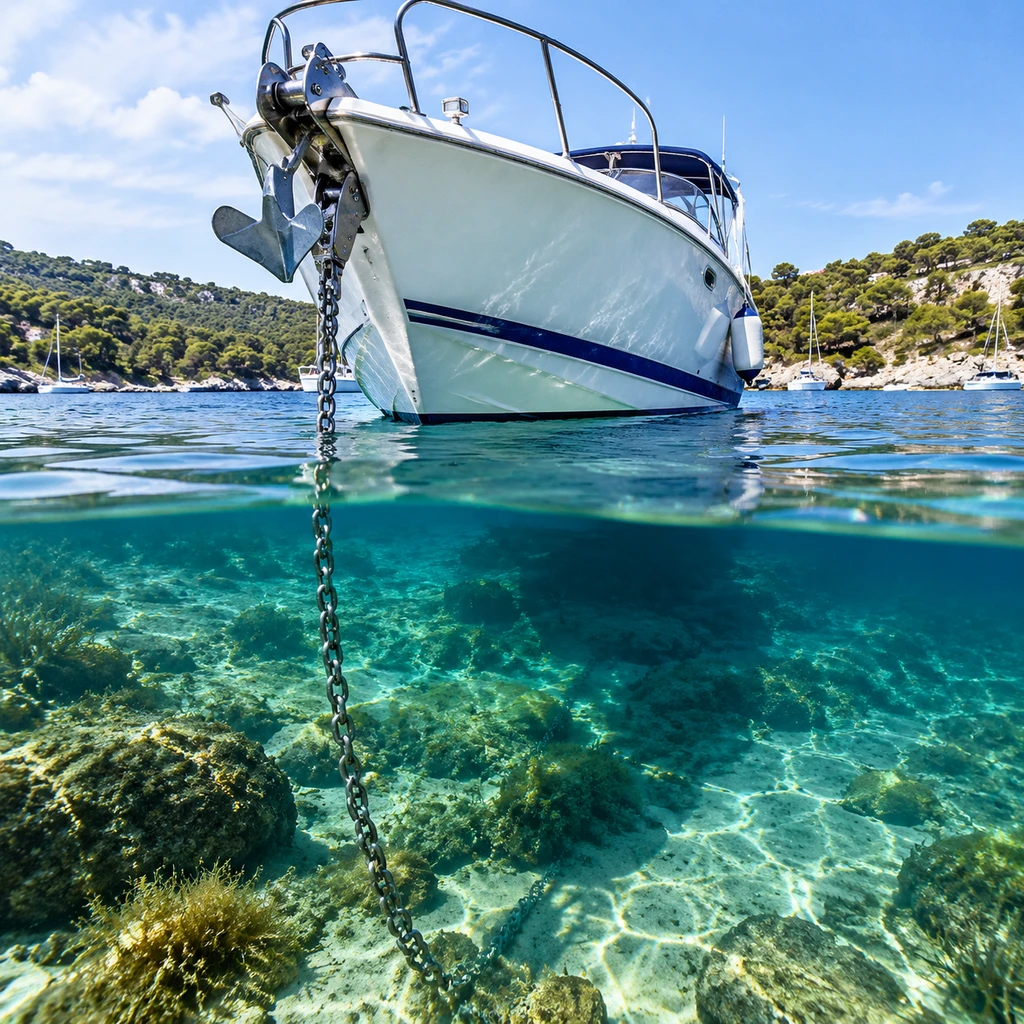
The best anchor for your vessel depends on more than boat length. Your boat’s weight and shape, the seabed where you anchor, local wind and current, and the rode that connects the anchor to the boat all affect how securely it holds.
Use a practical sequence: define your vessel and typical use, identify likely bottom conditions, compare anchor designs, then check the manufacturer’s sizing guidance and build a suitable rode. No anchor holds equally well in every seabed or weather condition, so your choice should reflect where and how you actually cruise.
Start with Your Vessel and How You Use It
Choose an anchor by considering your vessel’s length and weight alongside where and how often you anchor. A day boat that anchors briefly in sheltered coves may need different equipment from a heavier cruising boat that stays overnight in exposed areas.
Length is a useful starting point, but it does not tell the whole story. A wide, high-sided boat can catch more wind than a low-profile vessel of similar length. Displacement, hull shape, windage, and the amount of gear aboard all influence the forces your ground tackle may face. Check the boat or anchor manufacturer’s recommendations using the vessel’s specifications, and avoid selecting by length alone.
Next, consider your cruising area and habits:
- Typical seabed: Note whether your usual stops have sand, mud, rock, weed, or a mix.
- Exposure: A protected harbor and an open anchorage call for different levels of caution.
- Frequency: Frequent anchoring makes easy handling and reliable setting especially valuable.
- Storage and handling: Make sure the anchor fits your bow roller or locker and can be deployed safely by the crew.
A very heavy anchor can be awkward to handle and may not suit the boat’s bow gear. A compact model is easier to stow, but convenience should not outweigh appropriate sizing and performance for your conditions.
Match the Anchor Type to the Seabed
The right anchor type is the one that can set and hold reliably in the bottoms you encounter most. Fluke, plow, and claw anchors each have strengths, but none is a universal solution for sand, mud, rock, and grass.
Fluke anchors, often called Danforth-style anchors, use broad, pivoting plates that bury in soft bottoms. They can provide strong holding power in sand and mud for their weight and are easy to stow flat. Dense weed, very hard ground, or rocky seabeds can prevent the flukes from setting or make them difficult to retrieve.
Plow anchors have a shaped share intended to dig into the seabed as the rode pulls. Many are suited to a range of common bottoms, including sand and mud, and some can reset when the boat changes direction. Their shape and construction vary, so performance depends on the specific model and bottom conditions. They may be heavier and take more bow or locker space than a flat fluke anchor.
Claw anchors have a curved, multi-pronged form and can be useful across several seabed types. They are often straightforward to handle and may reset after a shift in pull. Their holding performance can differ by bottom and model, and a claw may need a larger size than another design to achieve comparable holding in some conditions.
Rock is difficult for most anchors because there may be nothing soft enough to penetrate; a hook can snag instead. Thick grass can also block an anchor from reaching the substrate. Check local charts, cruising guides, or reliable local knowledge where available, and choose gear for the bottom rather than relying on a type’s general reputation.
Choose an Appropriate Anchor Size
Select anchor size using the anchor manufacturer’s guidance for your vessel and the conditions in which you expect to anchor. Vessel length matters, but weight, windage, and exposure can change what is appropriate.
Start with the manufacturer’s sizing chart for the exact anchor model, then compare its vessel-length or displacement range with your boat’s actual specifications. If your boat is near the upper end of a range, often anchors overnight, or regularly faces stronger wind and current, discuss an appropriate margin with the manufacturer or a knowledgeable marine supplier. Do not assume that simply moving up one size fixes an unsuitable anchor type or poor rode setup.
Also confirm practical compatibility before buying. The anchor needs to fit the bow roller or be stowed securely, and its shank and attachment point must work with the boat’s hardware. Consider whether the crew can deploy and retrieve it without strain, especially if the anchor is used often.
Oversizing can add weight, complicate handling, and put extra demands on the windlass and bow fittings. Undersizing may leave too little reserve for conditions that exceed the calm weather you expected. Manufacturer guidance gives a starting point, not a guarantee of holding power; seabed, setting technique, rode scope, and changing conditions still matter.
Consider the Rode, Chain, and Scope
An anchor rode is the complete connection between the anchor and the vessel, usually made from chain, rope, or a combination of both. Its length and setup influence how the anchor sets and how well it stays embedded.
Chain adds weight near the anchor and resists abrasion against the seabed. Rope is lighter and more flexible, which can reduce the load carried at the bow and make handling easier. Many boats use a chain leader joined to rope, combining abrasion resistance near the bottom with lighter rode farther from the anchor. The right arrangement depends on the vessel, anchor, anchoring depth, windlass, and expected use.
Scope is the amount of rode paid out compared with the vertical distance from the bow roller to the seabed. More scope generally lets the rode pull at a shallower angle, helping the anchor remain set. The required amount varies with depth, conditions, and the type of rode; follow the anchor and boat guidance, and leave room for a changing tide. Too little scope can lift the anchor’s shank and cause it to break out, while too much may leave insufficient swinging room in a crowded anchorage.
Use sound shackles and secure connections suited to the rode and anchor, and make sure any joining link can pass through the bow roller or windlass. Keep a reliable method of marking or estimating rode length so you know how much is deployed. For specific seamanship guidance on anchoring and rode handling, consult the U.S. Coast Guard’s boating safety resources.
Account for Wind, Current, and Changing Conditions
Wind and current increase the load on an anchored vessel, so choose and deploy ground tackle for the conditions you may face, not only those at the moment you drop the hook. A calm arrival can become a demanding overnight stay as the breeze, tide, or weather changes.
Wind pushes the hull and any exposed canvas or cabin structure, while current acts on the underwater hull and can pull from a different direction. When these forces shift, the boat may swing around the anchor. A change in direction can also disturb an anchor that was holding securely, particularly if it has not reset well in the seabed.
Before anchoring, check the forecast, water depth, tidal range, expected wind direction, and available swinging room. Choose a location with adequate clearance from shore, rocks, and nearby boats. In unsettled conditions, a protected anchorage may be a better decision than relying on a larger anchor to compensate for exposure.
Carry a suitable safety margin in your anchor and rode selection, but remember that extra gear cannot guarantee a hold. If conditions build beyond the anchorage’s protection or the vessel’s equipment and crew capacity, be ready to move. Keeping an alternative anchor can also help when the primary design is poorly suited to a particular bottom, provided both anchors and their connections are correctly sized and maintained.
Set, Check, and Maintain Your Anchor
To anchor securely, lower the anchor under control, pay out suitable rode, and confirm that it has set before relying on it. Then monitor the vessel’s position and inspect the gear regularly for wear or damage.
- Prepare: Check that the anchor is attached properly, the rode is clear to run, and the area has enough depth and swinging room.
- Lower: Bring the vessel to a controlled stop and lower the anchor rather than throwing it, which can tangle the rode.
- Pay out rode: Let the vessel drift back while releasing enough rode for the depth and conditions.
- Set: Apply gentle reverse power, increasing gradually, and watch for signs that the anchor has dug in rather than skidded.
- Verify: Use fixed shore references, a chartplotter’s anchor alarm, or both to check whether the boat’s position remains consistent.
An anchor alarm is a useful alert, not proof that the anchor is holding. GPS accuracy, swinging room, and the alarm’s settings affect what it reports. A change in bearing or distance from a fixed reference can suggest dragging; check promptly, especially if wind or current is increasing.
After retrieval, rinse the anchor and rode with fresh water when practical, remove mud or weed, and inspect for bent flukes, cracks, corrosion, worn rope, damaged splices, and loose shackles. Confirm that the windlass and bow fittings are secure, too. Store the anchor so it cannot shift underway and so the rode can deploy without snagging. A sound anchor is only as dependable as the connections and equipment around it.