The Role of Trim Tabs in Boat Performance
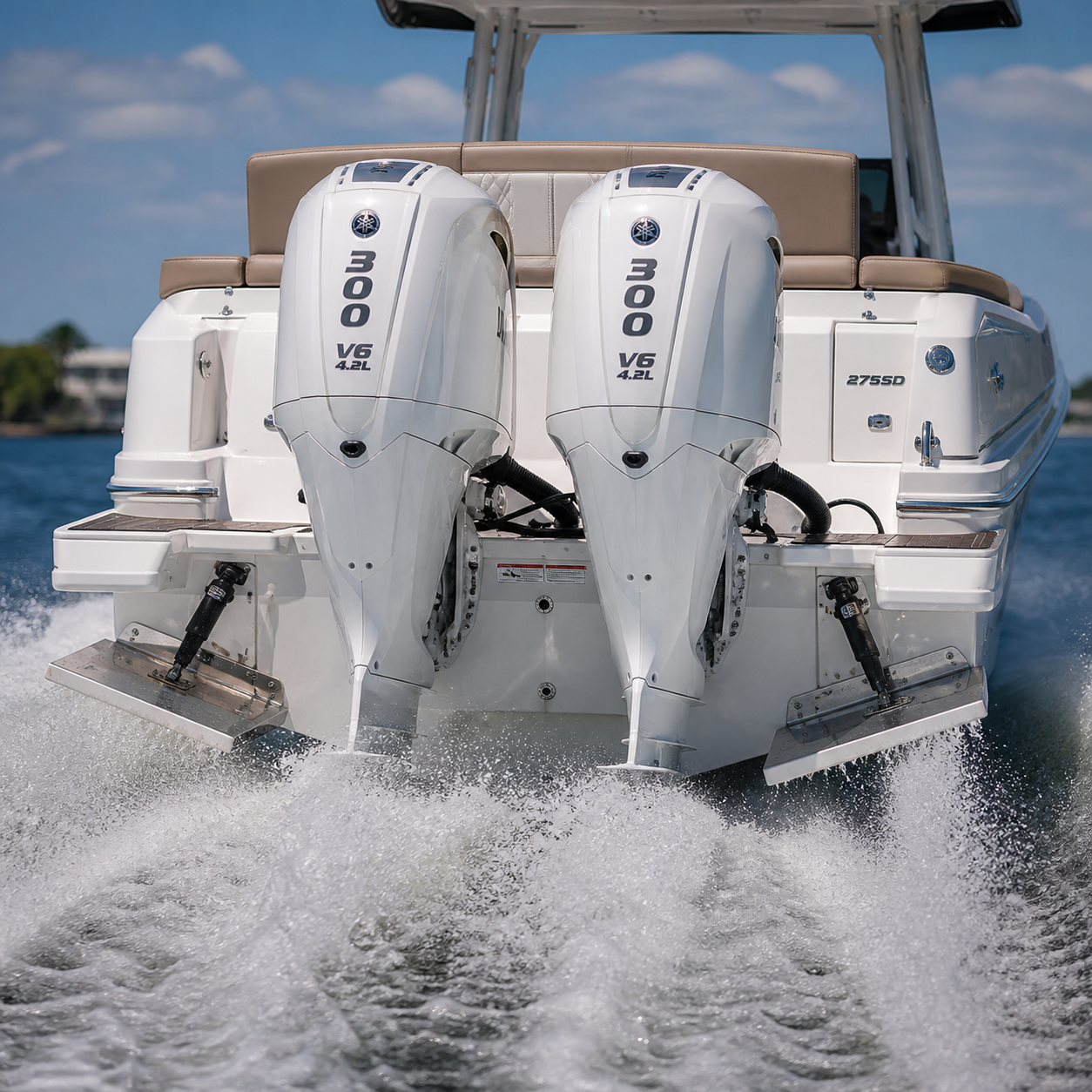
Trim tabs are one of the most useful control tools on a recreational boat, especially when you want better balance, quicker planing, and a smoother ride. They work with the hull and marine engines to fine-tune boat trim, not replace good seamanship or proper loading.
What Are Trim Tabs and How Do They Work?
Trim tabs are adjustable plates mounted on the transom that create downward force at the stern. That force changes hull attitude, helping the boat level out, reduce bow rise, and reach a more efficient running angle.
When a trim tab is lowered, it pushes the stern up and the bow down. When both tabs are used together, they can help the boat plane more quickly; when used separately, they can correct listing caused by passengers, gear, wind, or fuel imbalance.
Most boats use either hydraulic trim tabs or electric trim tabs. Hydraulic systems use a pump, fluid, and actuators, while electric systems rely on motors and screw-drive actuators. Both aim to improve control, but they differ in installation, maintenance, and response time.
Think of trim tabs as fine-tuning tools. The marine engine provides propulsion, but the tabs shape how the hull meets the water. That relationship matters because a flatter, better-balanced boat usually wastes less energy fighting drag and running at an inefficient angle.
How Trim Tabs Improve Boat Performance
Trim tabs improve boat performance by helping the hull get into the best position for the conditions. They can shorten the time to plane, reduce bow rise, improve visibility, and make the boat feel steadier and easier to control.
One of the clearest benefits is faster planing. If a boat carries a heavy stern load or has passengers moving around, trim tabs can help it reach planing speed with less struggle. That often means a more confident takeoff and less time with the bow lifted high.
They also reduce bow rise, which helps the helmsman see forward sooner. On many runabouts and center consoles, that improved sightline is not just a comfort feature; it is a real safety advantage in traffic, near docks, or in choppy water.
Trim tabs can also limit porpoising, the up-and-down hopping some boats develop at certain speeds. They do not cure every hull issue, but a small tab adjustment often calms the cycle enough to make cruising more predictable.
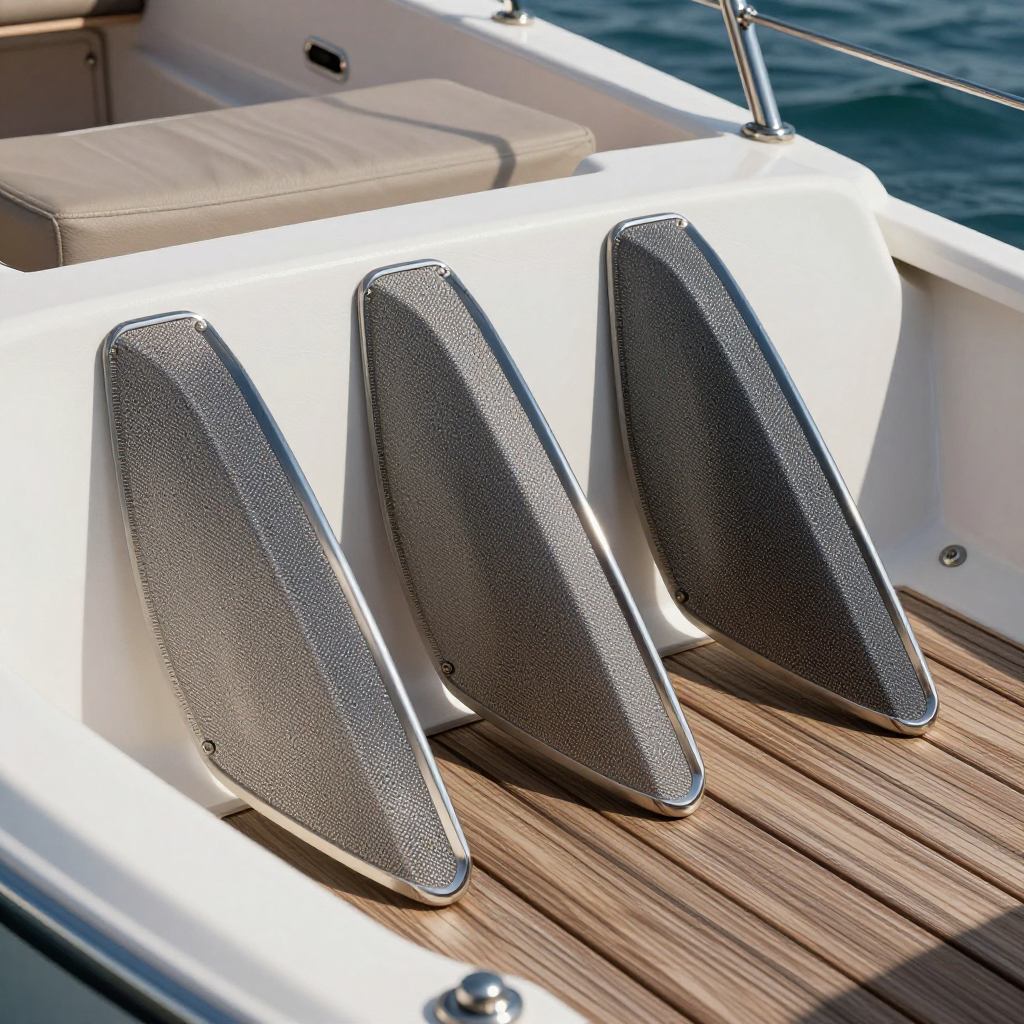
Another important gain is stability. If a boat is listing to one side from uneven weight or side wind, independent tab control can level the deck and reduce the need to constantly steer against the lean. That makes the boat feel calmer, especially on long runs.
Trim Tabs and Fuel Efficiency
Trim tabs can help improve fuel efficiency by keeping the boat at a more efficient running angle, but they do not guarantee fuel savings on every hull or in every condition. The real benefit comes from reducing drag caused by poor boat trim and excessive bow-up attitude.
When a boat runs too nose-high, the hull pushes more water than it should. That adds resistance, and the marine engine may need to work harder to hold the same speed. A well-adjusted tab setting can help the boat ride flatter, which may reduce throttle demand in steady cruising conditions.
The practical rule is simple: if the boat is trimmed well, it usually feels less strained. That does not mean the tabs should always be down. Too much tab can create extra drag and hurt efficiency, so the goal is the smallest adjustment that gives the best ride and performance.
For many owners, the smartest way to think about fuel economy is this: trim tabs help the boat run cleanly, and clean running usually beats fighting the hull. If you want a dependable reference on hull resistance and planing behavior, the principles described in marine hydrodynamics resources such as https://en.wikipedia.org/wiki/Planing_hull are useful context, even though each boat reacts differently.
Using Trim Tabs in Different Conditions
Trim tabs are most useful when conditions change. The right setting for acceleration is usually not the right setting for cruising, and a boat that feels perfect in calm water may need a different adjustment in wind or chop.
During acceleration, both tabs are often lowered briefly to help the boat climb onto plane sooner. Once the hull is up and running, the tabs are brought back in small steps until the boat feels balanced and the bow rides comfortably.
At cruise, trim tabs are best used for small corrections. If people are seated to one side, one tab can be lowered slightly to correct listing. If the wind pushes the boat off balance, a modest adjustment can keep the hull level without forcing the wheel.
In rough water, tabs are useful but should be used carefully. A slightly flatter attitude can help the hull meet waves more cleanly, but too much tab may make the bow too low and create a harder ride. Following seas often call for a more conservative setup, because an overly bow-down boat can feel less secure.
The easiest way to learn is to adjust in short moves and watch what the boat does. If the change improves visibility, steadies the ride, and reduces steering effort, you are moving in the right direction. If the boat starts digging in or feels sluggish, back off.
Trim Tabs Compared With Engine Trim
The main difference is that trim tabs control the hull, while outboard or sterndrive trim changes the angle of the marine engine. Tabs level the boat and manage side-to-side balance; engine trim mainly affects how the propeller pushes the boat and how the bow rides overall.
Engine trim is often the first adjustment on an outboard or sterndrive boat. It can improve acceleration, let the prop work more efficiently, and change how the bow lifts at speed. Trim tabs then refine the result by correcting listing, helping with bow rise, and dialing in the running attitude.
A useful way to separate the two is to ask what problem you are solving. If the boat is struggling to lift onto plane or the prop feels loaded wrong, engine trim may be the right tool. If the boat is leaning, wandering, or riding too high at the bow, trim tabs are often the better answer.
These systems work best together, not as substitutes. Choosing trim tabs for better balance means accepting that they do not replace proper engine trim, and choosing engine trim for speed means accepting that it cannot correct a heavy crew on one side of the deck.
Choosing and Maintaining Boat Trim Tabs
Choosing the right trim tabs starts with boat size, hull shape, and how the boat is used. A bowrider that carries family weight differently than a center console needs a different setup, and an underpowered boat may benefit from quicker-response tabs more than a larger, already-efficient hull.
Electric trim tabs are often attractive because they are simpler to install and can have fewer fluid-related service points. Hydraulic trim tabs are valued for strong lifting power and proven performance, especially on larger boats, but they add pumps, hoses, and fluid checks to the maintenance routine.
Sizing matters. Tabs that are too small will not correct attitude well, while oversized tabs can make the boat feel twitchy and can add unnecessary drag. Manufacturer recommendations are the best starting point because they account for hull length, weight, and transom layout.
Maintenance is usually straightforward, but it should be consistent. Inspect for corrosion, damaged seals, loose fasteners, and stuck actuators. On hydraulic systems, check for fluid level and leaks. On electric systems, inspect wiring, switches, and actuator movement for smooth operation.
Replacement parts should match the system exactly. The wrong actuator, switch, or pump rating can create slow response or uneven movement, and mismatched components often cost more in the long run than a proper repair. If you need a technical reference for corrosion and electrical basics in marine environments, the U.S. Coast Guard boating safety materials at https://www.uscgboating.org/ are a reliable place to start.
Common Trim Tab Problems and Troubleshooting
Most trim tab problems show up as slow movement, uneven response, or a tab that will not deploy at all. These issues often come from power loss, corrosion, binding hardware, fluid problems, or a failed switch or actuator.
One common mistake is assuming every handling complaint comes from the tabs themselves. Sometimes the problem is weight distribution, engine trim, or a hull issue that trim tabs can only partially mask. If the boat still rides badly after careful adjustment, the tabs may be fine and the setup may need a broader look.
Slow or uneven movement usually points to hydraulic restriction, weak power supply, or actuator wear. Failure to deploy often means an electrical fault, blown fuse, or switch issue. Leaks and visible corrosion are stronger signs that parts are nearing replacement than simple adjustment.
Here are a few practical warning signs:
- One tab moves and the other does not
- The boat lists more than usual even after correction
- Movement is jerky, noisy, or delayed
- You see fluid around hydraulic fittings or actuators
- The control switch feels unreliable or intermittent
If the tabs still respond but seem weak, the system may need cleaning, fluid service, or electrical inspection before replacement. If the actuators are noisy, leaking, or corroded, or if the tabs no longer hold the boat attitude you need, professional inspection is the safer next step.
FAQ
Do trim tabs make a boat go faster?
Trim tabs do not usually add top speed by themselves. They can help a boat run more efficiently by improving hull attitude, but the main gains are often quicker planing, better balance, and less drag at cruise.
Should trim tabs be up or down while cruising?
Most of the time, trim tabs should be only as low as needed to keep the boat level and comfortable. Excessive tab at cruise adds drag, so the goal is a small, effective adjustment rather than keeping them fully down.
Can trim tabs reduce porpoising?
Yes, they often can reduce porpoising by changing the running angle and stabilizing the hull. They are not a cure for every hull behavior, but they are one of the first adjustments worth trying.
Are electric or hydraulic trim tabs better?
Neither system is universally better. Electric trim tabs are often simpler and easier to maintain, while hydraulic trim tabs are widely used for strong performance and durability on many boats. The better choice depends on boat size, usage, and service preference.
How do I know if my trim tabs need replacement?
Replacement is likely when the tabs move unevenly, leak, corrode badly, or no longer correct listing and bow rise the way they used to. If adjustment no longer produces a clear response, the system may be worn enough for new parts or a full replacement.
Trim tabs are not magic, but they are one of the most practical tools for shaping boat performance. Used well, they help the hull run flatter, improve control, and make the marine engines work in a more favorable range. Used carelessly, they add drag and confusion. The difference is usually in small, patient adjustments and regular maintenance.